Scientific Images
Some images and figures from ExPeRT research.
Click on each image to learn more about the science behind it.
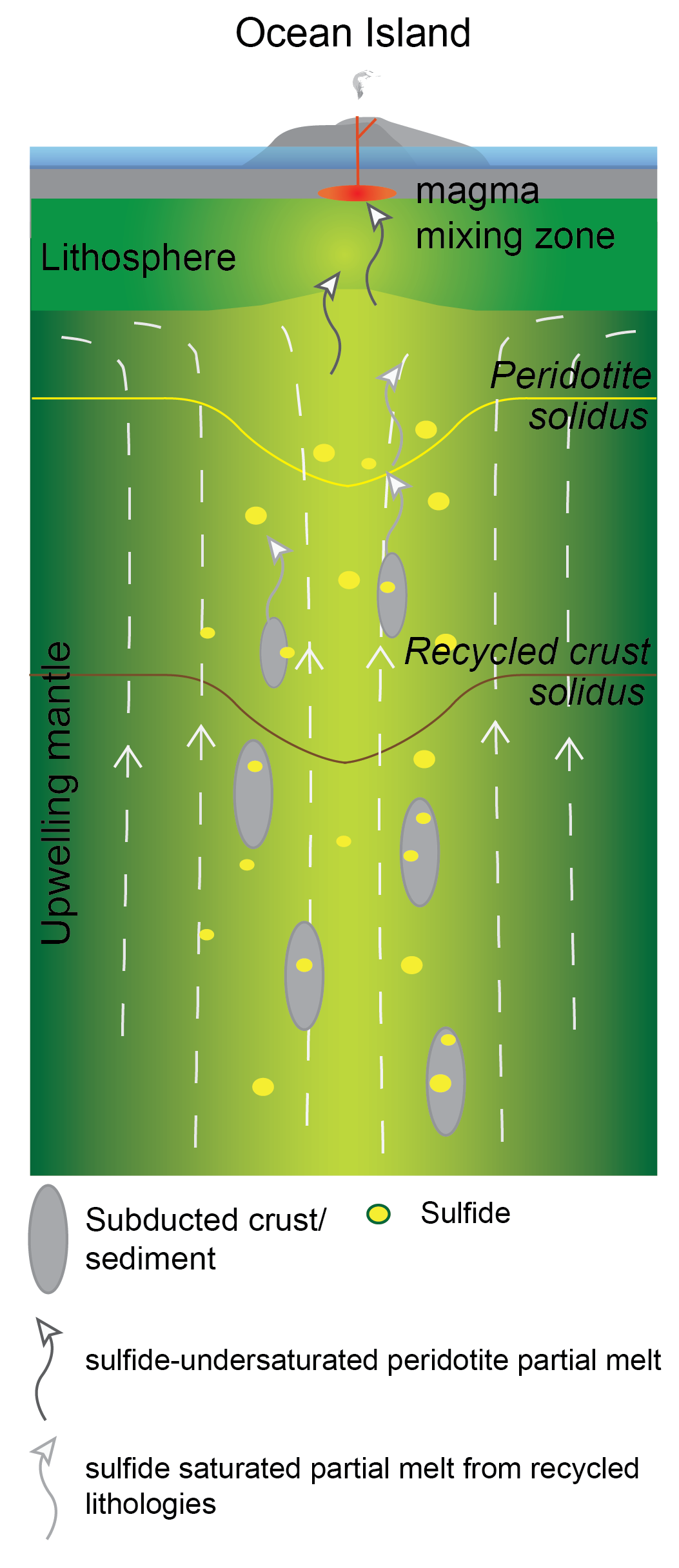
ExPeRT members explore the source of melt that produces ocean island basalts when the mantle is in the presence of volatile elements like sulfur.

In a few publications, Laura Carter explores the ways that various magma types (basalt, andesite, dacite) can interact with and break-down carbonate rocks (limestone and dolostone) that store carbon in Earth’s crust at different temperatures and depths: assimilation (consumption), thermal decomposition (heating) and skarnification (hot water reaction). This has implications for volcanic gas emissions and therefore Earth’s long-term climate.
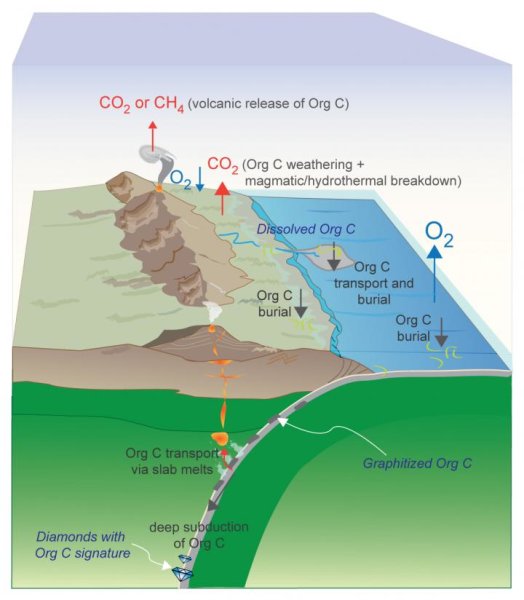
Megan Duncan published her work on cycling organic carbon through subduction zones where one plate slides beneath another, melts, and releases gases back into the atmosphere via volcanoes. The results have implications for the initial rise in oxygen in Earth’s atmosphere billions of years ago and made the News.
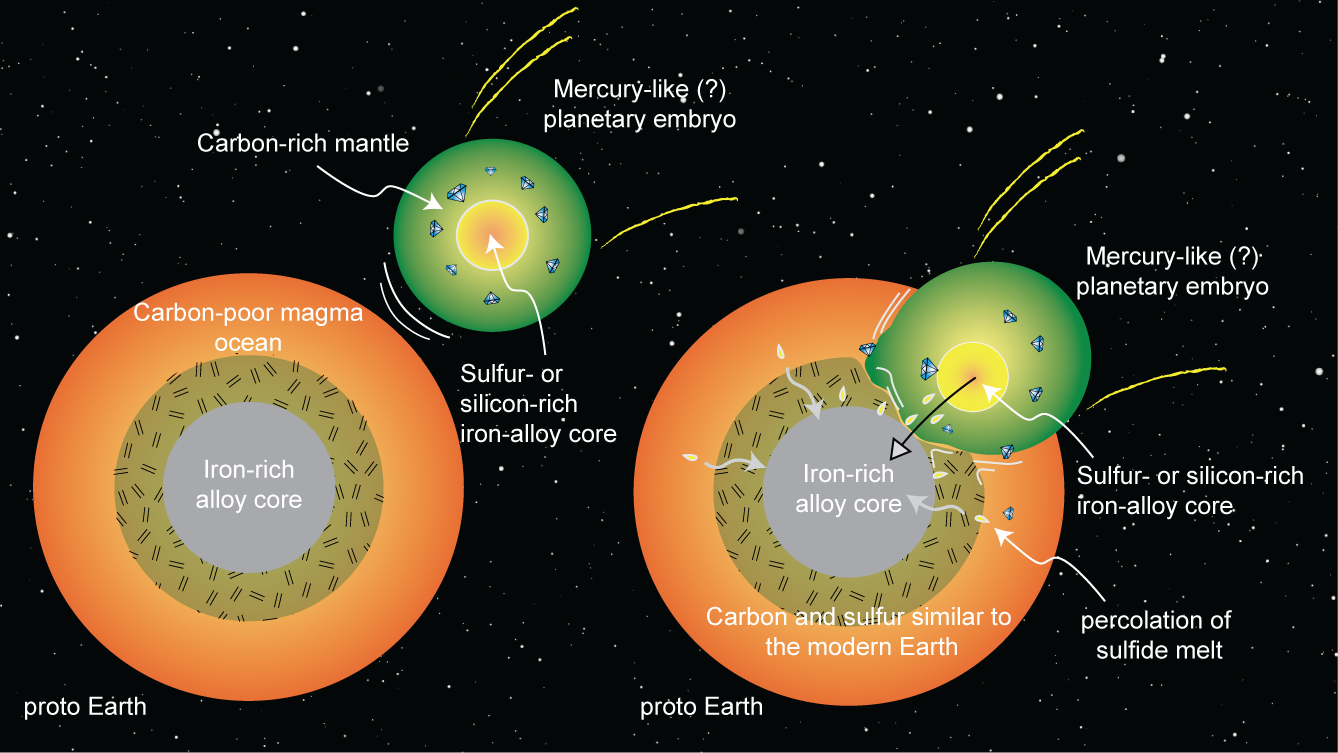
Working to answer a question ExPeRT is exploring, Yuan Li and other expert members published in Nature Geoscience about how some of Earth’s unique geochemistry could have been added during some of the impacts that occurred in the Solar System’s early years, such as the moon-forming impact. This work made the News.

In an overarching area of research ExPeRT explores, heterogeneities in the Earth’s mantle can lead to melting and ocean island eruptions, which was an area of investigation on which Ananya Mallik published.

In exploring mantle chemical heterogeneities, ExPeRT members determined the depth at which melting begins for volatile-bearing rocks deep in Earth’s interior.
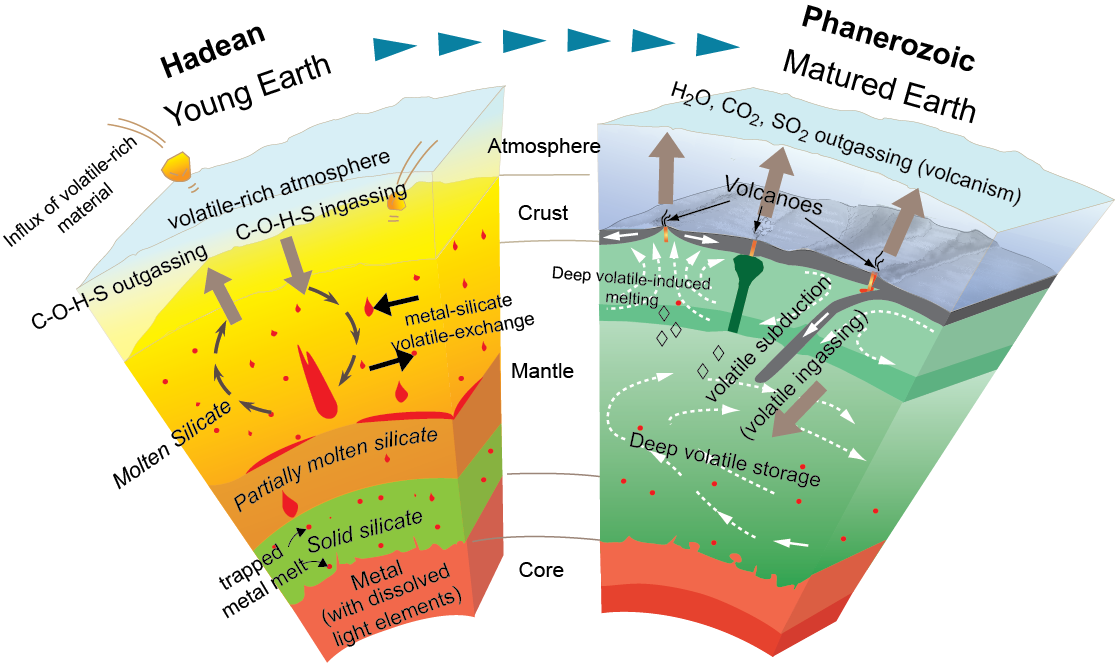
One area of interest for ExPeRT is how planetary interiors form in their early stages and evolve over time to modern processes, which controls element storage and cycling, as is shown in this image from Rajdeep Dasgupta’s 2013 publication.
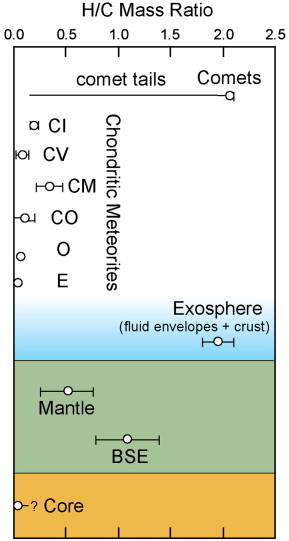
In this image from Dasgupta & Hirschmann 2010, we see the differences in Earth (BSE) and various layers of Earth (core, mantle, exosphere) as compared to other material in the solar system, which tells us about how carbon was provided and stored in the Earth.
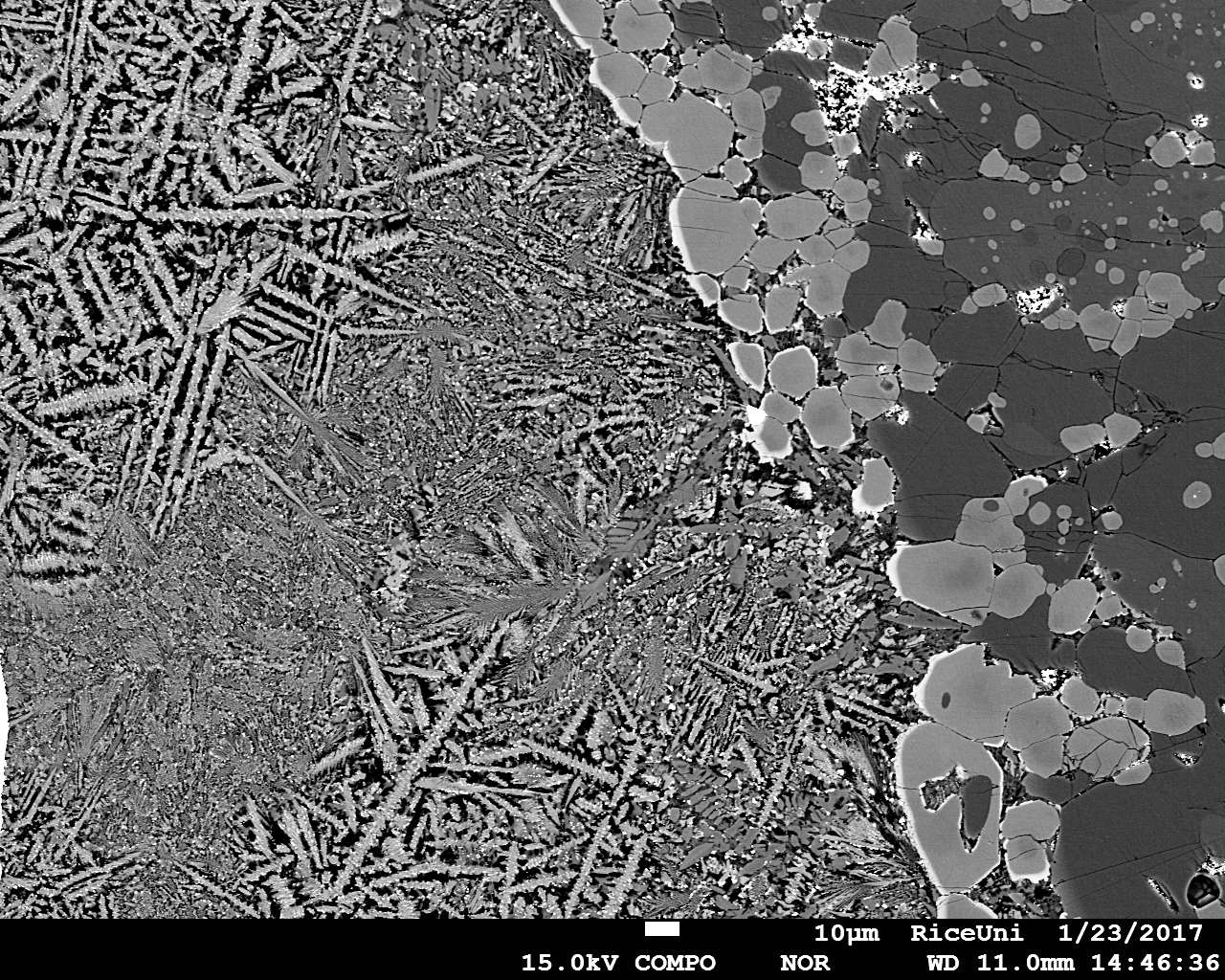
After experimentation, ExPeRT members identify melt generation and mineral stability on Rice’s Electron Microprobe.
On the left are some crystals that formed during cooling in a melt that generated at the experimental conditions. On the right are two different minerals, identified by their differing shades of grey, that are stable at the pressure and temperature of the experiment.

ExPeRT explores modern processes, like carbon and sulfur cycles and melt generation that produce crust and gases entering the atmosphere via volcanoes, like Sakurajima.
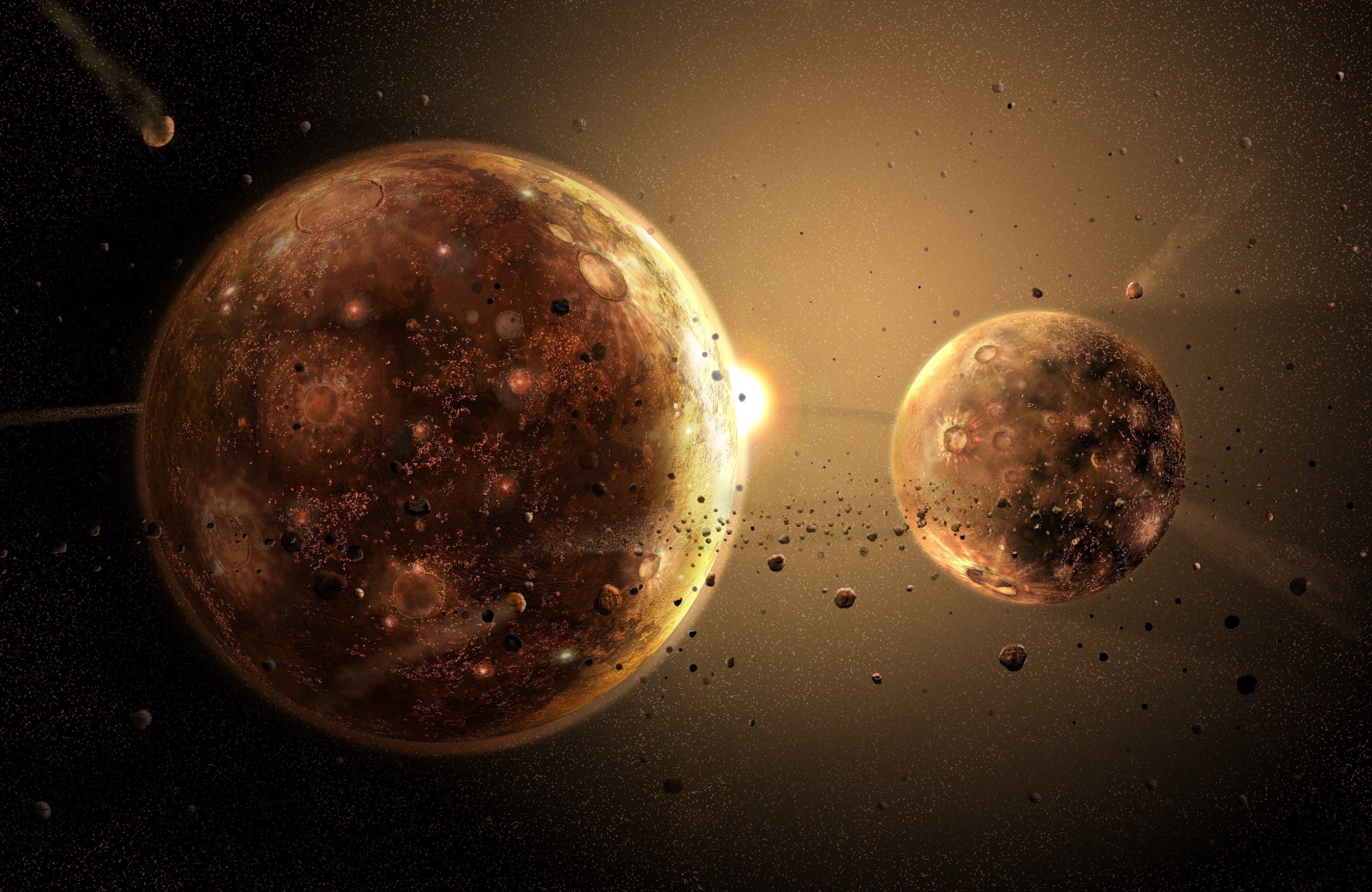
ExPeRT members explore the chemical processes in early and modern planets that form interior layers and their interactions.
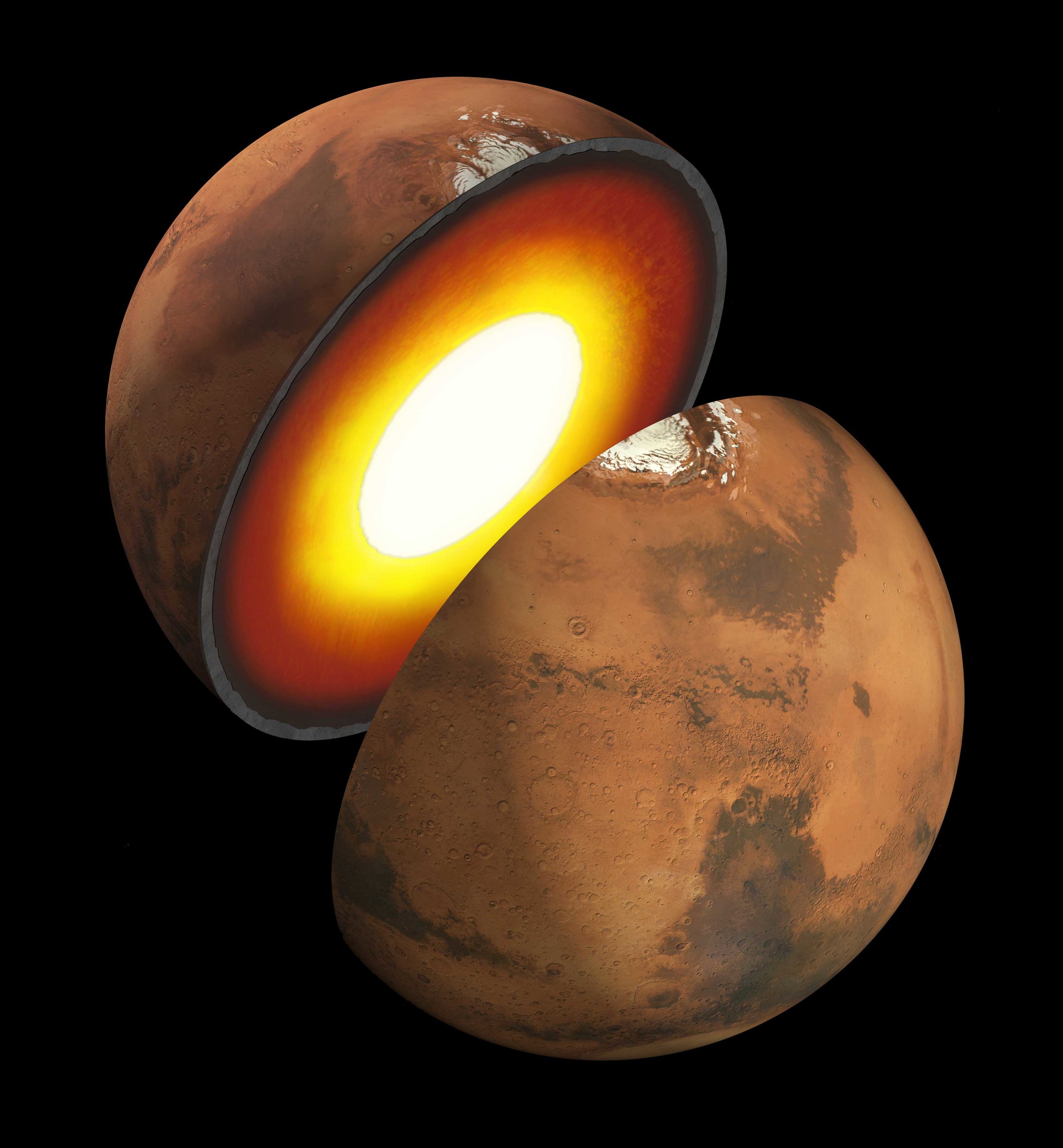
ExPeRT members recreate conditions of the birth of the solar system explore planetary formation, impacts, and evolution to modern processes.

